Which construction stage inspections are actually worth paying for in Tarneit
Builders offer five checkpoints. Most owners cannot justify all five. Here is the order to buy them in, and the reasoning behind it.
Published 4 September 2026 · 7 min read · Owner Inspections Pty Ltd
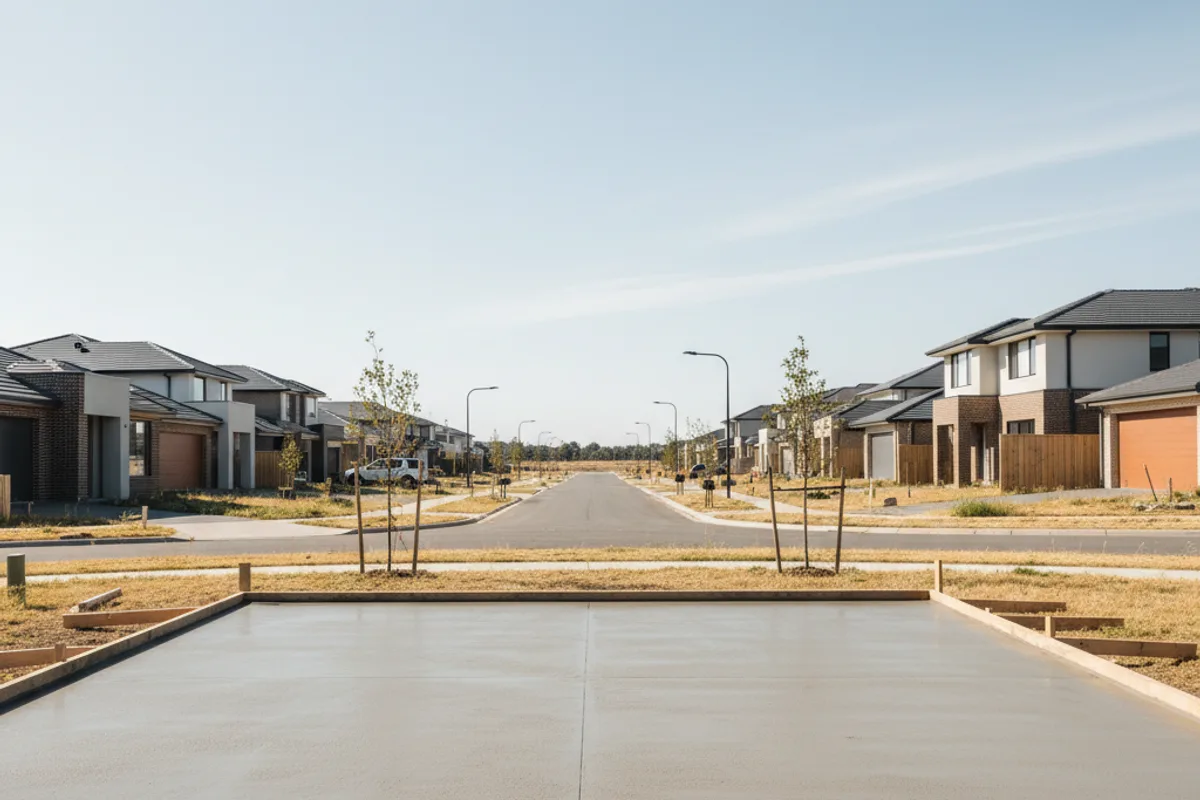
A new build in Tarneit passes through five points where an independent inspector can look at the work: base or slab, frame, lock-up, fixing, and practical completion. Booking all five is the thorough answer. It is also the answer most first-home buyers cannot fund on top of a deposit, stamp duty and a landscaping budget.
So the practical question is not whether stage inspections are worth it. It is which ones to buy when you can only buy some. The answer follows one principle: inspect the work that is about to become invisible.
The principle: buy the stages that get covered up
Every defect has a cost curve. On the day it is created it costs the builder a trade callback. Once the next stage covers it, the cost includes demolition, rework and delay, which is why the conversation gets harder. Once you have settled, the cost may be yours entirely, or it becomes a warranty claim that takes months.
That curve is steepest at slab and frame, because concrete and plaster are permanent. It is flattest at practical completion, where almost everything on the list is a finish item that can be corrected at any point in the next year.
If you buy one: frame
Frame is the single highest-value inspection on a Tarneit build. The wall and roof frames carry the house, and within days of completion they are covered in plasterboard and never seen again.
The frame stage is also where volume construction is most exposed to schedule pressure. Tie-downs and bracing are prescriptive: they are specified on the engineering drawings and either installed as specified or not. Notching and drilling of studs for services has defined limits. Straightness has a measurable tolerance. All of it is verifiable in an hour, and none of it is verifiable a week later.
If you buy two: add slab
Slab matters more in Wyndham than it does on a sand site, because much of the corridor is reactive clay, frequently over engineered fill. On reactive soil the slab is the element that manages ground movement, and the things that make it work are all pre-pour: reinforcement placement and cover, correct beam depths, membrane integrity, and the site drainage that keeps moisture content stable under the edges.
None of that is inspectable after the pour. What you get instead, three years later, is cracking, and a conversation with your builder about whether it is within tolerance.
What the other three stages actually give you
| Stage | What it protects | Can it wait? |
|---|---|---|
| Lock-up | Weatherproofing: roof cover, flashings, window and door seals, external cladding | Partly. Leaks show themselves, but usually after damage. |
| Fixing | Wet-area waterproofing, internal linings, cabinetry, doors | Waterproofing cannot wait. The rest can. |
| Practical completion | The final defect list before you pay and settle | No, but it is the cheapest to fix, so it is the least urgent to pre-empt. |
Waterproofing at fixing stage is the exception worth flagging. It sits behind tiles, which makes it as permanently concealed as framing, and shower leaks are among the most expensive residential defects to rectify. If your budget stretches to a third inspection, this is the one.
The stage most Tarneit owners skip, and regret
In practice the stage most often skipped is frame, because it falls early in the build when the house still looks like progress and nothing appears to be wrong. The stage most often booked is practical completion, because handover feels like the moment that matters.
That ordering is backwards. At handover you are documenting paint, door hardware and caulking. At frame you are documenting whether the structure was built the way the engineer drew it.
A note on builder access
Owners often assume the builder can refuse. Under the Domestic Building Contracts Act 1995 (Vic) you are entitled to have your own consultant inspect work you are paying for, and most builders working through the Wyndham estates treat independent inspections as routine. What helps is notice: give the site supervisor the date rather than arriving unannounced, and the whole thing stays uneventful.